The song takes on a whole new meaning when it’s sung by a woman doesn’t it? For those who love the Waylan and Willie version, here goes:
19 Monday Nov 2012
Posted in Uncategorized
The song takes on a whole new meaning when it’s sung by a woman doesn’t it? For those who love the Waylan and Willie version, here goes:
18 Sunday Nov 2012
Posted in Sunday Photos

17 Saturday Nov 2012
Posted in Farm Life
Yesterday, in my discussion of stoics, I mentioned that my Yankee-Irish horsewhispering boyfriend (YIHB) had gotten bad news about his knee. As Christmas decorations are already at the grocery store, I can share with you that visions of pins and overnight stays in the hospital and long, painful recoveries danced in my head:


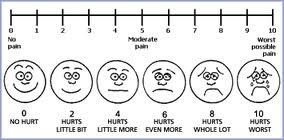
Good news. It turns out that knees — even with the assemblage of problems that my YIHB’s knees have — can be relatively easy to fix, and take considerably less time to recover, with less pain, than rotator cuffs (which was last spring’s injury).
My YIHB’s orthopedic surgeon told him he can look forward to 45 minutes of surgery, a day or two of pain meds, a few weeks of physical therapy, and a return to normal American daily life, in a few more weeks. Then he added, “but that’s not if you work on a farm.”
16 Friday Nov 2012
Posted in Horse Care, Inspiration
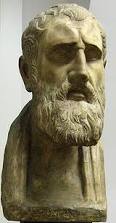
Zeno of Citium, founder of the Stoic school of philosophy, taught in Athens c. 300 BC
It’s common to hear people talk about how horses are stoic. Less common is people talking about how other people’s horses are stoic and their horses are not.
Are they right? Who am I to say?
Of course, that hasn’t stopped me yet.
Increasingly, I believe that all horses are stoic, and the ones who seem not to be stoic may be just as stoic as — or even more stoic than — the ones we think of as stoic.
I had a horse that I thought wasn’t stoic. In fact, I thought he was a hot house flower, and I called him that. True, there were things he wasn’t stoic about, like raindrops or a touch on the neck that was a little too soft, or, when he was younger, anything but a goat hair brush on his body.
 It took me too long to realize that he had ulcers (I’m older and wiser now). Once I realized he had them, I treated him for years and in a variety of ways, until he was finally retired at the age of 12 due to his incorrigible nature (which I now believe was attributable more to chronic pain than to Native Dancer inbreeding or mistreatment, although they likely played a part).
15 Thursday Nov 2012
Posted in Uncategorized
I began writing the series “How to buy a horse” back in May. My, how time flies when the horse flies are out. For those just joining us, you can hop in here, and read Parts I, II, III, IV, V, and VI later.
They say a picture is worth a thousand words. In the case of horse shopping, a video is worth several thousand words. And an even greater number of dollars.
When I’m shopping for a horse for a client (or for myself) I like to see both, because there are different things to see in each.
In photos, I like a classic conformation shot. And for a hunter, a jumper or an eventer, I want to see how a horse uses his legs (especially his front legs) over fences. Those are the basics but I’ll look at a dozen photos if a seller has them and sends them, because it’s amazing what you can see in one photo that you might miss in another.
Videos can confirm what you suspect after you’ve seen the stills. Or they can surprise you.
11 Sunday Nov 2012
Posted in Sunday Photos

07 Wednesday Nov 2012
Posted in Training
My loyal readers know that I don’t believe in “making” horses do anything. I don’t even believe it’s possible to “make” horses do anything (and neither do others, as evidenced by the famous saying, “you can lead a horse to water but you can’t make him drink”).
So why am I talking about making your horse pay attention? Simply because it would sound a little strange if I talked about how to persuade your horse to pay attention…or encourage your horse to pay attention. Those phrases sound too half-hearted for such a serious endeavor. And they miss the point — that paying attention is non-negotiable.
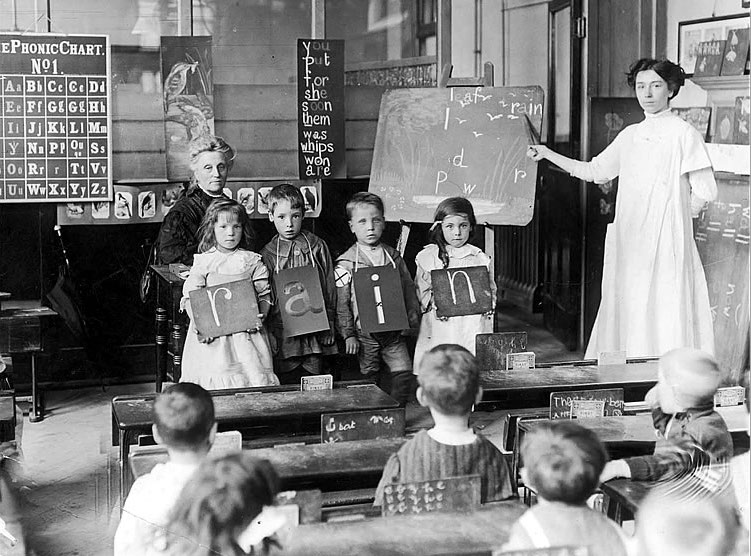
Still, it doesn’t have to be as deadly or as dreary as this spelling lesson in Chelsea, England in 1912
If you have horses that are unfocused or easily distracted…or more concerned with their own welfare than yours…or convinced that their agenda is more important than anything you might come up with…or who tune you out when they decide they feel like listening to a different kind of music than whatever it is you’re playing, read on. I have some ideas that might help you.
Unfortunately, as usual, the onus is on you. Here are some questions to ask yourself:
31 Wednesday Oct 2012
Posted in Uncategorized

28 Sunday Oct 2012
Posted in Sunday Photos

19 Friday Oct 2012
Posted in Inspiration, Racing
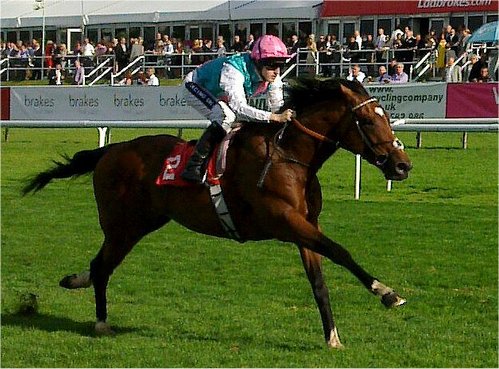
Frankel (winning as always) as a two year old
He’s the world’s top-ranked racehorse. He has won every one of his races (all 13 of them). His career earnings approach 3 million British pounds ($4.85 million) — and will get there if he wins his next race.
But that’s not all. There’s one more thing that makes Frankel an inspiration. It may, in fact, be the biggest thing.
He’s helped his trainer Henry Cecil, who was diagnosed with stomach cancer in 2006, feel “20 years’ better.” And it’s launched Cecil to the top as a trainer, after 43 years in the business.
He says, “I am so lucky to have been allocated Frankel to train. He has been an inspiration and a challenge, which I needed so badly. Through my illness, I feel that the help from my wife Jane, and the determination to be there for Frankel has helped me so much to get through the season.”
I think anyone who has found it difficult to take care of a horse…to train a horse…to rehabilitate a horse, especially during trying personal circumstances, can identify with what Cecil is saying. As Cecil says, “being there” for a horse has rewards untold and often unrealized until long after the difficult days have passed.
 Reflections on Riding